The Deeper Read
1: Tessa Foley

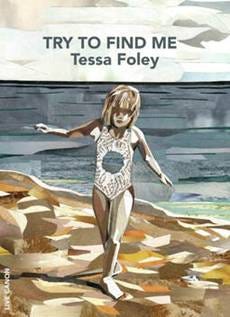
“Everything you ever gave me was Purple” from Try To Find Me (Live Canon, 2024), available from Tessa's website or Live Canon.
Everything you ever gave me was Purple

If it’s you
it’s got to be purple you said
and you gave me a crystal polished into plum,
it was the law, that it could only catch purple light.

A shirt that I could wear in the office,
reflecting violet stain on the cracked walls,
bruising white socks I carelessly discarded
in one soapy drum.

A necklace with giant plastic beads,
the colour of squishy grapes,
a diary and notebook and in it I am writing this,
it has a wisteria on the front that fills the cover
and my face with a pushy bloom.

A cushion embroidered with
mourning colours of sunset and silver stitches,
a mug with one big T in lilac that screams
this drink is mine and no one else’s.

And the last thing that you gave me,
your own purple fingers
that dropped and bloomed on top of the sheet
and my hand
for hours.

Purple hands
and if the time was different,
you’d say,
if it’s for you,
it’s got to be purple.

Tessa Foley
I’ve realised that I have a terrible habit of diving into a poem without having properly registered the title; also, that I skip Contents pages. I’m trying to pay better attention to both; I’ve been struck by Caroline Bird’s suggestion that poets try titles “like trying on hats in a shop” (McGlone 104) – I love an accessory – and equally by Glyn Maxwell’s meditation here on Substack as to whether poems need titles at all, or whether they’re a distraction. I think if a title works well it’s a way into the poem: the poet offering us their hand, inviting us to join them; and that, as with any other part of a poem, it’s well worth examining exactly how they deploy it and how, pace Levertov’s music image, they score it.
“Everything you ever gave me was Purple” is interesting, scoring-wise, in that only the first and last words use initial capitals. Straight off the mark, Foley spotlights “everything” and “purple”. Purple will be taken to its limit in this poem, reminding me of Joelle Taylor’s exhortation to “extend the metaphor until it snaps in your face”. Despite the veiled reference to purple prose or purple patches, a hallmark of Foley’s style is that it’s deceptively conversational: we could be on the street, down the pub, in a family living room. The scenarios and speakers seem familiar, and this familiarity draws us in. “If it’s you / it’s got to be purple you said”. It takes confidence to break after such a short first line, and it works; we immediately think: if it’s you…what? Who is ‘you’; the speaker, the reader, another? And we’re in, laughing in recognition at the second line with its effortless portrayal of family lore. Get labelled as the one who likes purple, or plants, or miniature porcelain tapirs, and bam, that’s all you get given for life. This is Chaucer-level skewering of the inherent laziness (albeit efficiency) of human relationships in two short lines.
Now the description takes off, with the alliterative sound play that Foley excels at: “a crystal polished into plum”. The plosives on the lips feel good enough to eat, but menacing sibilance foreshadows the final line of the first quatrain: “it was the law, that it could only catch purple light”. The caesura after “law” emphasises this heavy monosyllable. Who makes these rules? Who defines us? How can we escape such arbitrariness, when it’s hardwired into family dynamics? In the second quatrain, the uneasy sense of double-edged giving grows. There’s “A shirt that I could wear in the office” – for work, not pleasure – which somehow develops its malevolence from “reflecting violet stain on the cracked walls” to “bruising white socks” in the wash. As M. NourbeSe Philip has pointed out, verbs are the muscle of a poem (196), and here they pump up from passively “reflecting” to aggressively “bruising”; chiming both with the colour palette of the poem and punning “violet” with “violate/violent” and “stain” with “strain”. Cracked walls aren’t safe: here they are a literal representation of a crummy workplace and a metaphor for the fault lines in a relationship.
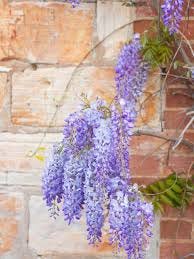
The short vignettes of the first two stanzas give way to a list in the longer third stanza as the poem gathers pace, whizzing us through time, each new item presumably marking a birthday or Christmas. So many purple objects, each somehow striking a discord through Foley’s subtle use of imagery: the bead necklace “the colour of squishy grapes” – as if the plum of the first stanza has deliquesced – a didactic “diary”, and most tellingly, a “notebook and in it I am writing this”. The poem’s very existence is infiltrated by a purple as invasive as the wisteria “on the front that fills the cover / and my face with a pushy bloom”. Wisteria is poisonous, so destructive it can cause subsidence – back to the cracked walls – and it’s apt that its “pushy bloom” plosives force this stanza into a fifth line.
We’re halfway through the poem but the purple isn’t done yet, and the tone darkens. Foley deftly moves us on from the sourness of “squishy grapes” to “A cushion embroidered with / mourning colours of sunset”, signalling that this poem is about more than duff (if well-meant) gifts; though for now this is a teaser, and we return to the earlier more conventional quatrains and sly humour with the description of “a mug with one big T in lilac that screams / this drink is mine and no one else’s”. It doesn’t, of course; one letter can’t define someone any more than a colour can. “[S]creams”, its long vowel sound hanging off the end of a line, brings us up short in the realisation that the idiom “this screams you” is actually a very sinister way of saying that something seems perfect for someone.
This is the volta of the poem, two thirds of the way through the stanza count. We have reached “the last thing that you gave me”, and it isn’t a thing, but “your own purple fingers”. We are still reeling from this line break – we know fingers are not meant to be purple – as the enjambment relentlessly propels us into the next line, one of the longest of the poem: “that dropped and bloomed on top of the sheet” like dying flowers, like grape must; the inevitability of death and decay as much a “law” as that outlined in one of the other longest lines. It’s as if the burst of realisation this gives us is the climax of the poem; the next lines “and my hand / for hours” are heartbreaking in their brevity and bathos: not with a bang, but a whimper, as T. S. Eliot says (87). Foley has chronicled the story of a life and a relationship through unsuitable gifts and reminded us that, in the end, our bodies are also an unsuitable gift in their fallibility and the inevitability of their failure.

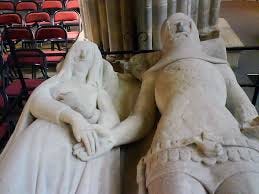
A lesser poet might have been tempted to leave us at the deathbed, but Foley is wiser and wrier than that. The final stanza returns to purple, plaintively reiterating the shocking image of purple skin whilst evolving it from “purple fingers” to “Purple hands” and noting with mournful humour that “if the time was different” – at any other point in this shared history – “you’d say, / if it’s for you, / it’s got to be purple.” This feels like a refrain, but it is subtly altered. It is gentler, the additional commas slowing it down, and this time the ‘gift’ doesn’t define the speaker, but acknowledges them; it is for them, rather than defining them. It’s a special poem that can not only pull off invoking Larkin (110) but take his ideas further than he did; “what will survive of us” may be love, but it’s more nuanced than that. Our legacy is our irritating tics, our misfiring gifts, our habit of seeing those close to us as clichés of themselves or even projections of our own selves, no matter how much we love them. Foley’s tender rage at this “law” of human relationships offers catharsis to all of us carrying complicated griefs.
*******
Something I like to do when reading poems is to see what poem is created by the end words, a kind of golden shovel in reverse that I feel reveals a lot about a poem and the poet’s process. It’s also a useful tool when editing my own work, as it immediately shows me any end words which aren’t up to the job. Here’s the end word poem from this piece, a line for each stanza, keeping each word’s original punctuation:
you said plum light.
office, walls, discarded drum.
beads, grapes, this, cover bloom.
with stitches, screams else’s.
me, fingers sheet hand hours.
hands different, say, you, purple.
*******
I’ll also share a poem of my own if I think there’s one which chimes with the poem under discussion. Here’s “Gift”, which was first published in tiny frights vol. 2 no. 2 Halloween 2023, edited by Carl Bettis: issues.tinyfrights.com/v02n02/tiny-frights-v02-n02-halloween-2023.pdf
Gift

Your necklace traps my hair,
twists it to the nape.

Each time I turn, it tugs –
plucks another strand.

I fetch scissors, blindly
cull the splintered curl.

What do you want from me,
clawing at my neck?

Suzanna Fitzpatrick
Works Cited
Eliot, T. S. “The Hollow Men.” Collected Poems 1909-1962, Faber, 1963, p. 87.
Larkin, Philip. “An Arundel Tomb.” Collected Poems, Faber, 1988, p. 110.
Levertov, Denise. “On the Function of the Line.” Chicago Review, vol. 30, no. 3, Winter 1979, pp. 30-6. JSTOR, doi:10.2307/25303862. Accessed 7 January 2026.
McGlone, Rosanna. The Process of Poetry, Fly on the Wall Press, 2023, p. 104.
Maxwell, Glyn. “Stop Giving Poems Titles.” Silly Games to Save the World, 6 April 2025, glynmaxwellgmailcom.substack.com/p/stop-giving-poems-titles?r=2q9p8f&utm_campaign=post&utm_medium=web&triedRedirect=true. Accessed 7 January 2026.
Philip, M. NourbeSe. “Notanda.” Zong! As told to the author by Setaey Adamu Boateng, Wesleyan University Press, 2008, pp. 189-211.
Taylor, Joelle. Reading and discussion for Well Versed on 17 September 2025, on Zoom via the StAnza festival. Available at youtu.be/Wm5HaynBtDo?si=VPy3T6FKUI3Z4FqB. Accessed 7 January 2026.