The Deeper Read 10
Anne Stewart

“Body Language”, from The Janus Hour (Overstep Books, 2010), available from Anne Stewart.

Body Language

I like the whisker of hair
under her armpit. It suggests
that she’s not one of those women
who are always trying to get rid
of their smell.

		Vicki Feaver    OI YOI YOI

Give me silky legs glistening in the sun,
bikini line and oxters done and no shame
for the dishonest shape-shifter I’ve become.

Give me orange and magnolia to bathe away
my scent – when it’s Woman-Ready-for-a-Man,
I’d just as soon my body said “Only if I say”.

And when I choose to go against the master plan
by coating earthworm lips with New Dawn rose
or copper pink, grape or cherry blossom balm

it’s no more a disguise than wearing clothes.
Or would you have me naked? No deceitful lines
between my vulva and the twitching public nose?

Hirsute and unscented may be truth of a kind,
but there are worse things, when you feel exposed,
than silk and oranges, and roses, to hide behind.

Anne Stewart
So far on The Deeper Read I’ve featured poems with dedications and one which references artwork, but not as yet one with an epigraph. It’s interesting to see what work this does, especially in partnership with the title, in setting the tone of the poem. The title here is no-nonsense; what I call a ‘Ronseal’ title: it does what it says on the tin. We are immediately located in the body, but there is already a conflict between the earthiness of lived bodily experience and the helpless airiness of language; what Lyn Hejinian describes as: “the struggle between language and that which it claims to depict or express” (49). We are also introduced to the uncomfortable connotations of body language, defined by the OED as: “The unconscious or conscious gestures and movements through which a person’s attitudes, feelings, or state of mind are revealed”. Body language, as distinct from spoken language, is out of our control and may let slip what we’d rather keep hidden.
This is important for the theme of the poem, and it’s especially juicy when handled by a poet, a professional manipulator of language. The intimations of bodily betrayal are intensified by the lens of femininity. The speaker in the poem is not necessarily the poet herself but does self-refer as “Woman” (5). Add to this the prism of the Feaver epigraph, a woman writing about another woman’s appearance, and we are firmly rooted in the politics of women’s bodies and the fight over who gets to control them. That Stewart has chosen terza rima for her poem adds another layer of nuance: this is a form a poet has to control in order to adhere to it and which in turn confines them to a strict rhyme scheme of ABA BCB CDC and so on (Poetry Foundation). There’s humour, too, in the fact that Dante used this form for The Divine Comedy. His looping rhymes mimic the circles of Hell travelled by his speaker; the never-ending loop of personal grooming might be seen as its own inferno.
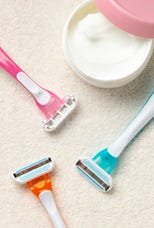
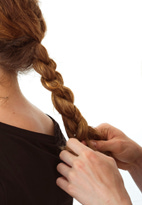
Stewart has also placed the Feaver epigraph at the head of her poem in order to present another view. Whilst Feaver’s speaker states “I like the whisker of hair”, Stewart’s speaker goes in hard with an imperative: “Give me silky legs glistening in the sun, / bikini line and oxters done and no shame”. (1-2). The plain-speaking statement is made all the more down-to-earth by the use of “oxters” in Stewart’s native Scots (OED), as uncompromising as “Give me”. Despite what adverts for depilatory products tell us, there is of course no shame in mammals having body hair; but Stewart makes a compelling case for removing any shame at all around a woman’s choices regarding her own body. We’re used to the trope of hairiness equating to the monstrous, but here it’s choosing to depilate that the speaker feels renders her a “dishonest shape-shifter” (3). The rhymes work hard here, Stewart’s skilled handling of the terza rima plaiting ideas and stanzas together. It’s time, the speaker implies, for what she has “become” (3) to have its moment “in the sun” (1) with no apology, and the B rhyme of “shame” (2) links deftly to “away” at the start of the next stanza (4).
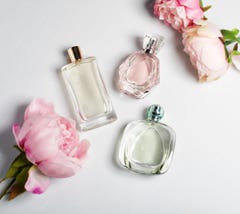
Having responded to the epigraph’s “whisker of hair”, the speaker goes on to the implied criticism of women for “trying to get rid / of their smell”. The imperative of the first line is repeated in an anaphora: “Give me orange and magnolia to bathe away / my scent” (4-5) – the calculated use of “scent” rather than Feaver’s use of “smell” both evoking the perfumes used and signalling that the speaker doesn’t see her own natural scent as pejorative but nonetheless may choose to change it. That to do so is empowering is firmly stated: “when it’s Woman-Ready-for-a-Man, / I’d just as soon my body said “Only if I say”.” (5-6). Discussing the poem in her article on smell in poetry, Mary Michaels observes: “since our body smells enable others to read our physiological states, they expose our fear or our sexual arousal … in a real sense, strong smells can be dangerous.” As Stewart herself says in an article for Strix Varia: “Men are constructed to pick up that scent. Take away a woman’s right to ‘manage’ it and you take away her right to self-protect. You take away her right to say ‘No’; to repel those men who would simply take.”
It’s the human condition that our bodies let us down from time to time – ultimately by dying – but for women living in a patriarchal society, there’s an additional bind. If we’re of childbearing age, regardless of whether we want to bear children, our menstrual cycles are always dragging us along for the ride, a monthly looping terza rima, unless we control them with artificial hormones; which in itself has side effects. Stewart makes the point that our ovaries may be sending out pheromones to the nearest male regardless of what our consciousness wants, and it’s her prerogative to “bathe away” this signal. No means no, even if our cycle may be inconveniently saying ‘yes’ in the background. The terza rima once again underlines this point: the pheromones can go “away” (4) unless “I say” (6).
Despite their linkages in the poem’s braid, these two stanzas have each been end-stopped; strong statements presenting an alternative viewpoint to the Feaver epigraph: I want to be able to remove my body hair without judgement if I choose; I want to be able to use perfume if I choose. The next two stanzas enjamb, developing this idea as the speaker considers other things she may or may not choose to do:
And when I choose to go against the master plan
by coating earthworm lips with New Dawn rose
or copper pink, grape or cherry blossom balm

it’s no more a disguise than wearing clothes.
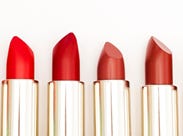
“[P]lan” (7) harks back artfully to “Man” (5), throwing into relief the true nature of this debate: doesn’t it all boil down to women being told what they ‘should’ do with their bodies? This has always been the ‘plan’ of the patriarchy, but ironically the “master plan” (7) of feminism is self-defeating if it ends up doing the same thing in a different way. Life is short – “earthworm lips” (8) may simply refer to the unadorned colour of lips but has sinister undertones of Marvell’s lines: “worms shall try / That long-preserved virginity” (27-28). I could go off on a side quest here about how very creepy it is that he imagines worms taking the place of his penis in his lover’s vagina – major red flag if that comes up on a dating profile – but I feel here that Stewart is making the point that we may as well wear lipstick if we feel like it. We’re animals, but our whole society is built on ignoring that: we’re mammals who shave (even men, though they are under less societal pressure to do so); we use contraception; why feel bad for choosing personal ornamentation? After the shivery memento mori, the cheerful colours and flavours of “New Dawn rose / or copper pink, grape or cherry blossom balm” (8-9) and even the daftness of marketing names like “New Dawn” (it’s a lipstick, not a ground-breaking societal shift) are in themselves a “balm”. Yes, it’s superficial, a mere “coating” (8), but equally “no more a disguise than wearing clothes.” (10).
After the headlong run-on between the third and fourth stanzas, the abrupt break here disrupts the smoothness of the terza rima and brings us up short, ready for Stewart to deliver the coup de grace, her italics making its question particularly pointed: “Or would you have me naked? No deceitful lines / between my vulva and the twitching public nose?” (11-12). We’re back to the end-stopped stanza: this question does not run on and isn’t left hanging; it is purely rhetorical. The logical end-point to disdaining anything ‘unnatural’ in relation to the body and its appearance is to be completely “naked” (11) and defenceless in society. If it is “deceitful” (11) to draw a defensive “line” (12) between one’s most vulnerable parts and “the twitching public nose” (12) then, Stewart implies, it is a necessary deception. The visceral image of the patriarchal “nose” literally sniffing out a woman’s private cycle is a powerful one, encompassing many levels of misogyny, whose queasiness around women’s bodies and their functions is paradoxically coupled with an intrusive prurience and appropriation, even violation: it is as if the nose is about to be poked into the vulva uninvited. As the speaker points out, this is “my vulva” (12), and the ‘line’ she is drawing here is metaphorical as well as meaning the literal shield of clothes.
If violation is the price of honesty, the flipside to being “dishonest” (3) is actually not that appealing. Although “Hirsute and unscented may be truth of a kind,” (13), is it always in our favour to be bluntly truthful? What if being uncompromisingly ourselves actually involves permitting ourselves to conceal? Either way, as Stewart notes: “there are worse things, when you feel exposed, / than silk and oranges, and roses, to hide behind.” (14-15). The terza rima is hard at work again, coupling “nose” and “exposed”, the latter hanging unprotected at the end of what is visually one of the longest lines in the poem, uncomfortably abutting the prowling “worse things” that are hinted at but left unsaid. Faced with this, “silk and oranges, and roses” aren’t much of a defence “to hide behind” (15).
At its end, the poem returns to the sensory list, which has run like one of the terza rima plaited strands throughout the poem. It began in the first stanza with touch and sight: “silky legs glistening in the sun, / bikini line and oxters done” (1-2), continued in the second with smell: “orange and magnolia” (4), and encompassed both colour and taste in the third: “New Dawn rose / or copper pink, grape or cherry blossom” (8-9). In sharp contrast, the sensory is almost entirely absent from the penultimate stanza, apart from the physically unpleasant connotations of “twitching” (12). In the last line Stewart returns to “oranges, and roses” (15), adding the softness of “silk”. That this is reminiscent of lingerie adds a duality to the comfort it purports to offer: it’s a natural fibre that feels good against skin but is often used in clothes which are simultaneously intimate and designed for display.
There’s a reason that, at 15 lines, this poem is almost but not quite a sonnet. For all its terza rima scheme, the majority of lines deliberately eschew iambic pentameter or even a ten-syllable count. The first stanza sets this rebellious tone with eleven-syllable lines. The ensuing stanza has lines which overshoot even further, only to snap into standard iambic pentameter in line 8, the syllables suddenly fitting to the ‘approved’ form much as the lips are covered with a “coating”. Similarly, the way in which the “disguise” of clothes in line 10 – undermined by the negative “no more” – pointedly fits the traditional syllabic pattern only serves to highlight both the ways in which women are expected to fit a template – even the template of not fitting a template – and the impossibility of fitting perfectly in a world which is not as neat as a syllabic pattern. Tellingly, the only other iambic pentameter line in the poem is the penultimate one, seeking scant comfort in the assertion “but there are worse things when you feel exposed,” (14).
This was never going to be a love poem: our relationship with our own bodies is hijacked the moment we dare to be born female in a patriarchal society. That Stewart ends the piece with an additional, odd-numbered line might be seen as a defiant finger flipped at the sonnet form, much as the deliberately awkward addition of “and roses” lengthens the final line to thirteen syllables. Whatever women “hide behind” (15), however many times they return to their grooming rituals, it’s never enough: present themselves how they like, they are vulnerable in a patriarchal society which seeks to predate them by first moulding them into something that can’t fight back; a different kind of grooming. The poem began with “shame” (2) – because even saying “no shame” means using the word, and Stewart deliberately leaves it hanging unpunctuated at the end of a line – and ends with “hide” (15). The tacit point is that giving women a choice in how to hide is a Hobson’s Choice: no choice at all.

*******
Something I like to do when reading poems is to see what poem is created by the end words, a kind of reverse golden shovel. Here’s the end word poem from this piece, with a line for each stanza, keeping each word’s original punctuation.
sun, shame become.
away Man, say”.
plan rose balm
clothes. lines nose?
kind, exposed, behind.
*******
Each week, I’ll share a poem of my own if I think I’ve one which chimes with the poem under discussion. Here’s “Upkeep”, which was first published in 2023 in Abridged 0-94 on the theme of “Severin: Punishment”, edited by Gregory McCartney and Susanna Galbraith, available in print or here. Written in couplets, it’s a meditation on personal grooming, and the point at which this tips over into self-harm.
Content note: self-harm.
Upkeep

Slice the hair with silver, kill the wolf
who prickles, insolent, over the skin.

Scour the face: punish it for letting in
other people’s muck, their eyes.

Soak, pickle in soap, rinse and spin
the bald and bleeding body, let no scab

mar the shining form. Let need dissolve
and scream into the plughole as you beach,

breathe air once more, reluctantly allow
the water to dry out. Clean again –
but always afraid of the dirt, the phoenix stain.

Suzanna Fitzpatrick
Works Cited
The Guardian. “What is the origin of the phrase “Hobson’s choice”?” Notes and Queries: Semantic enigmas, The Guardian, www.theguardian.com/notesandqueries/query/0,5753,-23563,00.html#:~:text=Thomas%20Hobson%20was%20the%20owner,delicious%20sort%20of%20verbal%20paradox. Accessed 12 March 2026.
Hejinian, Lyn. “The Rejection of Closure.” The Language of Inquiry, 1st ed., University of California Press, 2000, pp. 40-58. JSTOR, www.jstor.org/stable/10.1525/j.ctt1ppbsq.8. Accessed 11 March 2026.
Marvell, Andrew. “To His Coy Mistress.” Poetry Foundation, www.poetryfoundation.org/poems/44688/to-his-coy-mistress. Accessed 11 March 2026.
Michaels, Mary. “How Does Your Poem Smell?” Connections Spring 2005, pp. 12-4.
OED. “Body Language, N.” Oxford English Dictionary, Oxford UP, July 2023, doi.org/10.1093/OED/1121632413. Accessed 11 March 2026.
---. “Oxter, N.” Oxford English Dictionary, Oxford UP, December 2025, doi.org/10.1093/OED/5323891106. Accessed 11 March 2026.
Poetry Foundation. “Glossary of Poetic Terms: Terza rima.” Poetry Foundation,
www.poetryfoundation.org/education/glossary/terza-rima. Accessed 11 March 2026.
Stewart, Anne. “Body Language.” Strix Varia, December 2005. Website no longer available.
Excellent as usual, Suzanna. The idea of Marvell having a dating profile had me in hysterics. Can you imagine! Actually, that’d probably make a great poem…