The Deeper Read 11
Mat Riches

“Clearing Dad’s Shed” from Collecting the Data (Red Squirrel Press, 2023), available from Red Squirrel Press.

Content note: bereavement
Clearing Dad’s Shed

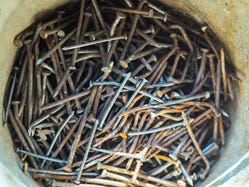
Tobacco tins of tacks and screws
cover every surface and shelf.
A hatchet is Excalibured
in a chopping block by the door.

The spiders have been working hard
to lash together oiled chisels,
cables and caulking guns. His words
linger in curls of shavings.

I drag out offcuts of old planks
to burn in the rusted brazier,
the ash settling and mixing in
with the dust that covers each box

of random tools piled up beneath
his hand-built workbench. It’s obvious
I’ve got ‘all the gear but no idea’
when I carry them to my car

to let them gather new dust at home.
The long drive back is spent blaming:
him for not showing their uses,
me for not asking him.

Mat Riches
Mat Riches’ poem puts me in mind of Margareta Magnusson’s 2017 book Döstädning: The Gentle Art of Swedish Death Cleaning. The aim of this practice is to go through possessions before death to avoid leaving your family with the huge task of clearing them after you have died. Sadly, the experience of many of my bereaved midlife friends belies this, and they end up burdened with emptying entire houses of a lifetime of things whilst also trying to deal with their grief; something Riches skilfully evokes in this poignant poem. I was startled to find out whilst researching this piece that Magnusson died very recently aged 92; I assume she left everything tidy.
As with Anne Stewart’s poem last week, the title is a ‘Ronseal’ title: does what it says on the tin, appropriately enough for a shed poem. It immediately signals either illness or bereavement; “Dad” is not able to do this job himself, and no longer needs the things in his shed. The first stanza sets out the Herculean task, and we share the speaker’s sense of overwhelm as he shows us how: “Tobacco tins of tacks and screws / cover every surface and shelf.” (1-2). The departed dad is of that war-born generation which remembers rationing and never throws anything out that might be useful; commendable in today’s need for sustainability. However, these repurposed tins from the days of loose-leaf tobacco are full of things that have not, in fact, been re-used and now won’t be.
Like a mythical quest, it seems the speaker must first pass an initiation test in order to enter the hallowed space: “A hatchet is Excalibured / in a chopping block by the door.” (3-4). With its connotations of resolving a conflict, the buried hatchet is metaphorical as well as literal, evoking the unfinished business left by the death of a parent; as Riches subtly hints, there is more to unpack here than the shed itself. The bathos of giving the name of King Arthur’s legendary sword to a humble hatchet is characteristic of Riches’ deadpan humour, but also sets us thinking about Arthurian legend. Arthur had an inauspicious father figure in Uther, who conceived him by tricking Igerna/Igraine into non-consensual sex by magically impersonating her husband, then was poisoned when Arthur was young. Arthur’s own son, Mordred, killed him in battle (Howells). Although the gender of the speaker is not specified, I feel that Riches signals here that we are in the tricky territory of how father-son relationships play out in a patriarchal society, drawing on the sexist cliché that sheds are a male space, the ‘man cave’ (OED).

If this is a man cave, the man is missing; we are in the territory of absence as presence. There is life here, but it is the sort that contributes to decay: “The spiders have been working hard” (5). The departed father figure is still present in the care he took of his tools: “oiled chisels” (6), and “His words / linger in curls of shavings.” (7-8). This is an interesting image, conveying the complexity of remembrance, the cognitive dissonance of grief. This is so much the dad’s space that it seems impossible that he isn’t still in it; that he isn’t somehow speaking to his orphaned son through the things he used so much but has left behind; that his breath isn’t stirring the “curls of shavings” (8).
The first two stanzas are end-stopped, each a complete vignette: still lives of memento mori. Their pace is measured, alternating enjambed with end-stopped lines as we look slowly around the scene with the speaker, reluctantly assessing the job ahead. The next three stanzas, however, run into each other: only a third of their lines are end-stopped, making them read more quickly. The speaker turns from meditation to action, perhaps driven by the anger of grief: “I drag out offcuts of old planks / to burn in the rusted brazier,” (9-10). The gentleness of “linger” (8) turns to the harsh monosyllables of “drag” and “burn”, and we feel the strong emotions rising in the speaker: why have you left me, why have you left all this for me to deal with? Fire is a very violent, elemental way of disposing of something, and the choking image of “the ash settling and mixing in / with the dust that covers each box” (11-12) is unsettlingly evocative of a cremation.
The care with which the contents of the shed were named in the second stanza – “oiled chisels, / cables and caulking guns.” (6-7) – shifts in the fourth stanza to the abrupt “random tools piled up” (13), and we suddenly wonder if there is a dual meaning to line 7: “cables and caulking guns. His words / linger in curls of shavings.”. As noted above, the caesura and run-on create the tender idea of the father’s voice somehow persisting in the whisper of the wood shavings he’s left behind. However, it is also possible to ignore the caesura and read the syntax as a single parsing line (Longenbach 69): that these tool names are the father’s words, not the son’s; that the son in some unconscious way resents inheriting them.

This demonstrates Riches’ extraordinary skill with syntax and line break. The first and second stanzas each comprise two sentences, but the next sentence is stretched over six lines, running through the third stanza and ending on the second line of the fourth stanza. Like line 7, line 14 pivots on its caesura, tipping us into what is effectively the volta of the poem: “his hand-built workbench. It’s obvious / I’ve got ‘all the gear but no idea’” (14-15). The meticulous care which imbues “hand-built workbench” is in sharp contrast not only to the dismissiveness of “random tools” in the preceding line but also to the son’s painfully “obvious” realisation that he has no clue what to do with these things. It’s a triple helplessness: loss; being faced with a huge chore; lacking knowledge which now can’t be sought from a person who has died.
In the face of this, the speaker’s dry humour of the first stanza becomes caustic and self-deprecating. Its acidity slowly sinks in: we’re not immediately sure why the speaker’s implied ineptitude is “obvious”. Riches lets the word hang at the end of line 14 before giving us clues: perhaps it’s the way “I carry them to my car” (16); or that they are being transported merely “to gather new dust at home” (17). There are many slant rhymes in this poem linking ideas, for example “Excalibured” (3), “hard” (5), “words” (7); but it’s telling that the only full rhyme is in the mocking slang phrase “’all the gear but no idea’”, hurled at people with more money than sense (Wiktionary), introducing an air of class discomfort.
Like anyone suffering a bereavement, this speaker is now facing the “long drive back” (18) – perhaps a metaphor for the rest of their life – interrogating the relationship they had with a loved one no longer present to them. The final three lines of the poem deftly conjure how these feelings will slowly settle like the ash in line 11 and the dust in lines 12 and 17: “The long drive back is spent blaming: / him for not showing their uses, / me for not asking him.” (18-20).
The father didn’t say, the son never asked. In three lines, Riches nails the tragedy of male relationships stunted by a patriarchy which permits anything to men but their feelings and allows nothing to women other than their feelings; a situation uniformly oppressive. Many of the poems in this book develop this idea, notably “Captain’s Pond” (19) and “Two and a Half Men in a Boat” (13), as well as a triptych of poems about working for his father’s construction business; as “Summer Job” recounts: “This was my chance to earn enough money / to leave and be the first of us / with a degree of ‘book learning’.” (15). Riches taps into a Heaneyesque blend of nostalgia, pride and regret as he meditates on identity, loss, and having moved an uncomfortably “long drive” away from his roots. In “Digging”, Heaney famously resolves to honour his turf-cutter ancestry by looking at his pen and resolving “I’ll dig with it” (31). The grieving speaker of Riches’ poem knows he has neither expertise with nor use for his father’s tools but nonetheless can’t bear to throw them away. There is no resolution here, because there never is in the life’s work that is grief: the loved one is dead and is never coming back. It’s a familiar trope that there is often ‘blame on both sides’ in a difficult relationship; here, the point is more that all close relationships are difficult in their own way. Understanding that blame can be both mutual and inevitable may offer release.

*******
Something I like to do when reading poems is to see what poem is created by the end words, a kind of reverse golden shovel. Here’s the end word poem from this piece, with a line for each stanza, keeping each word’s original punctuation.
screws shelf. Excalibured door.
hard chisels, words shavings.
planks brazier, in box
beneath obvious idea’ car
home. blaming: uses, him.
Each week, I’ll share a poem of my own if I think I’ve one which chimes with the poem under discussion. Here’s “Summerhouse”, part of the sonnet sequence which makes up the first half of my collection Crippled. I’m particularly interested in how poetic form can both contain and express emotion, and have written a piece here on Substack for Consilience Journal on the subject. Copies of Crippled are available from Red Squirrel Press, or DM me to buy a signed one.
Content note: chronic illness, caring
Summerhouse

A small pine chalet, waiting at the end
of the garden: your sixtieth birthday gift.
You joked you’d sit here with a drink, pretend
you could hear the sea. The latch is stiff

with a churchy iron ring, resists
attempts to lift it. Empty spiders’ nests
fog windowpanes like cataracts. It’s just
a store for summer lumber veiled in dust –

discarded cushions with a chintz of mould,
old furniture. Retirement went on hold
some time ago. You can’t put up your feet,
can’t take time off, can’t rest in your retreat –

sit inside with my mother, looking out.
You know the tide won’t come in now.

Suzanna Fitzpatrick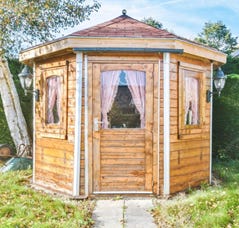
Works Cited
Fitzpatrick, Suzanna. “Safety in Chaos: Poetic form as a means of processing trauma.” Consilience, 14 July 2025, open.substack.com/pub/consiliencejournal/p/safety-in-chaos?utm_campaign=post-expanded-share&utm_medium=web. Accessed 19 March 2026.
Heaney, Seamus. “Digging.” New Selected Poems 1966-1987, Faber, 1990, pp. 1-2.
Howells, Caleb. “The Legend of Uther Pendragon, King Arthur’s Father.” The Collector, 4 January 2026, www.thecollector.com/uther-pendragon-king-arthur-father/. Accessed 19 March 2026.
Loffhagen, Emma. “Margareta Magnusson, Swedish ‘death cleaning’ author, dies age 92.” The Guardian, 16 March 2026, www.theguardian.com/books/2026/mar/16/margareta-magnusson-swedish-death-cleaning-author-dies-age-92. Accessed 18 March 2026.
Longenbach, James. The Art of the Poetic Line, Graywolf Press, 2008.
Magnusson, Margareta. Döstädning: The Gentle Art of Swedish Death Cleaning, Canongate, 2017.
OED. “Man Cave, N.” Oxford English Dictionary, Oxford UP, March 2026, doi.org/10.1093/OED/1173960600. Accessed 18 March 2026.
Wiktionary. “all the gear and no idea.” Wiktionary, en.wiktionary.org/wiki/all_the_gear_and_no_idea. Accessed 19 March 2026.
a familiar scene, but one that never tires and the same pinch we feel it here. the father did not share the son did not ask - really painful regrets, and one that we feel so much empathy, and Suzanna another great dive!
aren’t humans amazing - we often the same experiences - I recently had a poem call ‘The Shed’ accepted / published (online) which was inspired by clearing out my Dad’s shed. I think Mat’s poem does it better than mine (!) but the sentiment is similar. Glad to have come across this one - thanks!