The Deeper Read 20
Vanessa Lampert

“Margate in September” from Say It With Me (Seren, 2023).
Vanessa’s website is here.
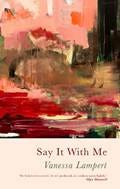
Margate in September

If there’s sand and you can let yourself,
what is there to do on a beach but dig?
We dig, the boy and me with our hands
and the old red spade because it’s back to school
tomorrow and back to work tomorrow,
and today the sun still thinks it’s June,
spreading loose glory over the sea, over us
with our gorgeous and our ungorgeous bare skin,
and we’re pushing ourselves right up to the margin
of the last page of summer, digging an island
as the tide comes in, salt water reaching
to take back what we borrow, and it must be
the boy’s thrill that calls the others. Kids,
and tattooed men with shovels. A tribe of diggers,
that’s what we are, with a drumʻn’bass soundtrack
rising from somewhere, and us digging to the beat,
digging ourselves an island until it’s a thing
of greatness with us on top, water all around
in the almost evening, holding our spades,
our ice creams and beer. Everyone together,
not digging now, but thinking our separate thoughts
of all that’s scared or incomplete,
here’s the marvellous thing we finished.

Vanessa Lampert
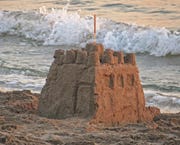
There are nine poems in Vanessa Lampert’s debut collection which feature the coast in some way, and many others also set in outdoor spaces – parks, hills, mountains, allotments. She has a knack for harnessing the metaphorical connotations of a place and letting them permeate a poem, and this is no exception. The title sets us down in a place and time of year without fanfare, then proceeds to beachcomb both for all their emotional associations.
The first two lines are end-stopped, unhurried, drawing us in by asking a rhetorical question: “If there’s sand and you can let yourself, / what is there to do on a beach but dig?” (1-2). Its simplicity is belied by the subordinate clause “and you can let yourself”. It’s a challenge – what’s stopping you? – which also makes us pause to consider why we might hesitate. A child would immediately start playing with the sand, and digging a hole is the easiest way of doing that, because it requires only hands. Children, of course, have spare energy; for an adult, digging for no reason might seem too much like work. At this point we have to mention the ghost of Seamus Heaney’s “Digging”, hovering over beach and peat bog with its meditation on family history, class and identity (1-2).
This adult is with a child, however, and both throw themselves into their joint project, making hay (or holes) while the sun shines:
We dig, the boy and me with our hands
and the old red spade because it’s back to school
tomorrow and back to work tomorrow,
(3-5).
The poem gathers pace, running on after the brief caesura following “We dig,” all the way to “tomorrow”, with an awareness of how the sands of time are as slippery as those on a beach; that time and tide and the grind of school or work wait for no-one. We realise at this point that Lampert is deploying a four-stress line, echoing the rhythms of Anglo-Saxon poetry, which I also discuss on The Deeper Read 15 on Leah Larwood. It’s a pulse which dates back to a time more in tune with the rhythms of the natural world than our own, and evokes the breaking of waves on the shore. The associations come with them: Tennyson’s anguish in the face of loss – “Break, break, break,” (165) – Macbeth’s nihilism as he contemplates his self-destruction – “To-morrow, and to-morrow, and to-morrow,” (5.5.19). Lampert’s genius is that she doesn’t say any of this: she simply tells her story and lets us do the rest, pace Keats: “Poetry should be great & unobtrusive, a thing which enters into one’s soul, and does not startle it or amaze it with itself but with its subject.”
The story is compelling, told as a snapshot of time in one block, and after the initial two-line question it runs on in an eleven-line sentence from lines 3 to 13. The lines sometimes enjamb and sometimes not, Lampert deftly controlling the pace, pausing where she wants us to take something in. Thus we tumble onwards with “it’s back to school / tomorrow” (4-5) as time runs away with us, then pause to consider the unwelcome fact that it is also “back to work tomorrow,” (5); but we get a respite with the end-stopped parsing line “and today the sun still thinks it’s June,” (6), Lampert using “and” instead of “but” here and letting us do the rest.
We don’t have to pretend it’s still the holidays; it is still the holidays, even if only for one more day, and the delight in this is emphasised with a sudden splash of the sensory in an otherwise plainly told poem: the sun “spreading loose glory over the sea, over us” (7). There have been so many descriptions of sun on sea and Lampert wisely avoids them all with “loose glory”, somehow both sensual and abstract, conveying how hard it is even to look at its dazzle, let alone describe it. She also refrains from imagery around the bodies of adult and child, restricting herself to the drily humorous “our gorgeous and our ungorgeous bare skin,” (8). Even this chimes with the melancholic sense of the ache of human vulnerability in the face of both time and the elements, the additional beat in this line taking us almost over a cliff edge.
In spite of this, the narrative pushes onwards, as do the diggers:
and we’re pushing ourselves right up to the margin
of the last page of summer, digging an island
as the tide comes in, salt water reaching
to take back what we borrow, and it must be
the boy’s thrill that calls the others.
(9-13)
The metaphor “the margin / of the last page of summer” is strikingly original and unafraid to be meta in its intentions, breaking the fourth wall by tacitly acknowledging itself as a poem; and in the juxtaposition of the end words “margin” and “island” we feel the loneliness of the poet-observer and ultimately of all human lives. Three present continuous verbs – “pushing “ (9), “digging” (10), “reaching” (11) keep up the pace and sense of urgency, also embodied in the four enjambed lines. This task is time-bound, as are holidays, as is life; the predatory sea, like death, “reaching / to take back what we borrow,” (11-12), its “salt water” reminiscent of tears.
Unlike Tennyson and Macbeth, however, this speaker refuses to navel-gaze, swinging us with the imperative “must” from this image to “the boy’s thrill”, and suddenly the lonely speaker and child are joined “by the others. Kids, / and tattooed men with shovels.” (13-14). The one-sentence pause allows us to take in this unlikely crew, simultaneously comic and moving, then Lampert cements their alliance by asserting “A tribe of diggers, / that’s what we are,” (14-15), and from this point on, neither narrative nor characters stop until their mission is accomplished:
with a drumʻn’bass soundtrack
rising from somewhere, and us digging to the beat,
digging ourselves an island until it’s a thing
of greatness with us on top, water all around
in the almost evening, holding our spades,
our ice creams and beer.
(15-20).
Another sudden sensory detail, this time aural, drives the task to its conclusion, along with more present continuous verbs including the repetition of “digging”, making us realise that this word appears four times in the poem, with “dig” appearing twice, as well as once in the noun form “diggers”. If Heaney’s benign spirit is still lurking in this anaphora, Lampert lays it decisively: her speaker is not sitting thinking about digging and whether they identify as a digger; they are getting on with it with their “tribe”, all of them “digging ourselves an island until it’s a thing / of greatness with us on top,” (17-18). For now, they will triumph; though even as they revel in their achievement and celebrate with refreshments, there is still “water all around / in the almost evening,” (18-19): the tide is turning and night is falling.
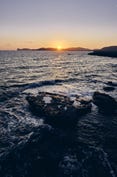
Introspection has finally been earnt, and there is a solemn moment, reminiscent of communal worship:
                                                           Everyone together,
not digging now, but thinking our separate thoughts
of all that’s scared or incomplete,
here’s the marvellous thing we finished.
(20-23).
The frenzy of group activity has ceased, and everyone is back in their own bodies: “together” (20), “but thinking our separate thoughts” (21). The final two lines hold the cognitive dissonance of these thoughts: a microcosm of human experience, simultaneously “scared or incomplete” (22) whilst rejoicing at “the marvellous thing” that is life. Our stories are incomplete until we are dead, so we are constantly seeking, but by and large we don’t want to be dead. Anything we can finish, whether a mound of sand or a poem, satiates our hunger for completion without termination; anything we can do with others assuages our solitude. As Donne says, “No man is an island,” (1), and even as we retreat to our moated mounds we look for others to build them with. Ending the poem with “finished” is an assured move, especially given that the preceding end word is “incomplete”; Lampert allowing both poem and reader to sit with their dissonance and accept it as the human condition.

*******
Something I like to do when reading poems is to see what poem is created by the end words, a kind of golden shovel in reverse. Here’s the end word poem from this piece, keeping any punctuation, and in one block as per the original poem. As ever this brings up some fascinating juxtapositions – the sole rhyme of “skin” and “margin”, “soundtrack” coupled with “beat” – as well as groupings of words that highlight the theme of the poem, most notably the poignancy of “margin” and “island”, “thoughts” and “incomplete”.
yourself, dig? hands school tomorrow, June, us skin, margin island reaching be Kids, diggers, soundtrack beat, thing around spades, together, thoughts incomplete, finished.
*******
Each week, I’ll share a poem of my own if I think I’ve one which chimes with the poem under discussion. This is another beach poem, though telling a different story to Lampert’s; I thought of it following the fascist march in London last weekend and it started riffing with Lampert’s poem in my mind, putting a different spin on the idea of “digging ourselves an island” (17).
Here’s “Two Boys”, which was longlisted by Nick Makoha for the London Independent Story Prize in 2023 and published in their anthology. Written when my son was three and I was pregnant with my daughter, it’s a specular, the ‘mirror’ form invented by Julia Copus and powerfully used in her poem “The Back Seat of My Mother’s Car”; I deploy it here to compare the very different experiences of two childhoods.
I thought long and hard before writing this: I’m always squeamish about writing poetry of breaking news, not wanting to pile in, appropriate or exploit in any way. But I was so sad and angry: I wanted to mark the desperately unfair cutting short of a brief precious life for what were basically political reasons; the use of the word “swarm” is deliberately taken from the poisonous rhetoric around the time of this event.
I wrote it so that it may be remembered that this was allowed to happen.
Content note: death of a child.
Two Boys

i.m. Alan Kurdi, September 2015

Sand –
in your hair, in your eyes –
invasive grains. A new shoreline
gathering in cupped palms, water
drizzling from fingertips puckered with cold.
Tiny insects in a tender swarm:
you salvage, lay them out,
the seriousness of three years on your face.

The seriousness of three years on your face.
You, salvaged, laid out,
tiny insect in a tender swarm:
drizzling from fingertips puckered with cold;
gathering, in cupped palms, water,
invasive grains. A new shoreline
in your hair; in your eyes,
sand.

Suzanna Fitzpatrick
Works Cited
Copus, Julia. “The Back Seat of my Mother’s Car.” The Poetry Archive,
www.poetryarchive.org/poem/back-seat-my-mothers-car/. Accessed 20 May 2026.
Donne, John. “No Man Is An Island.” All Poetry, allpoetry.com/No-man-is-an-island. Accessed 20 May 2026.
Fitzpatrick, Suzanna. “The Deeper Read 15: Leah Larwood.” Substack, 17 April 2026, https://suzannafitzpatrick.substack.com/p/the-deeper-read-15. Accessed 20 May 2026.
Heaney, Seamus. “Digging.” New Selected Poems 1966-1987, Faber, 1990, pp. 1-2.
Keats, John. “On the Aims of Poetry: Letter to J. H. Reynolds, 3 February 1818.” Poetry Foundation, 13 October 2009, www.poetryfoundation.org/articles/69384/selections-from-keatss-letters. Accessed 20 May 2026.
O’Donnell, Daniel Paul. “Old English Metre: A Brief Guide.” University of Lethbridge, 21 November 2006, modified 1 December 2020, people.uleth.ca/~daniel.odonnell/tutorials/old-english-metre-a-brief-guide. Accessed 20 May 2026.
Shakespeare, William. Macbeth. The Arden Shakespeare, edited by Kenneth Muir, Routledge, 1992, p. 153.
Tennyson, Alfred. “Break, break, break.” Tennyson: A Selected Edition, edited by Christopher Ricks, Longman, 1992, p. 185.