The Deeper Read
2: Mary Mulholland

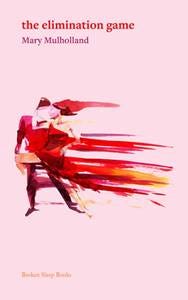
“The Regretting Room” from the elimination game (Broken Sleep Books, 2025), available from Mary or from Broken Sleep Books. Mary’s debut collection, The Dodo Stories, is forthcoming in October 2026 from Nine Arches Press.
The Regretting Room

i hang up my scar-coat
things consumed to avoid the consequences of feeling
things i can’t remember
books i took for the taking
the text i wrote at two when I gave up waiting
a photo-shoot appointment i missed in new york
the yes i couldn’t say to your face
three lovers i roped together
my dark shades that stop me speaking
my inability to feel without using a blade
the shadows and shadows and shadows
that night i didn’t call my mother but went to a film
by morning she was dead
the colour of wrongdoings is a night without moon
in this room i find a child who hid long ago –
ask if she’s willing to swap places

Mary Mulholland
Mary Mulholland’s filmic title catches the eye, sitting enticingly in the contents page between “Little Death” and “Rebel Guide”: an example of how deft ordering in a poetry book spins a narrative. It struck me as filmic; I was thinking of Kathryn Bigelow’s The Hurt Locker, but a quick look on IMDb lists fifty-nine films with “room” in their titles (corceiro). It’s interesting to consider the double-edged nature of a room as psychological trope: safety, but also potentially entrapment.
Fittingly, this poem is a single stanza; “stanza”, of course, being the Italian for “room”. In poems of multiple stanzas, a reader moves through them as through a house, but poems in one block keep us in one place, much like the speaker here, trapped by their regrets. It’s a bold move, and demonstrates the Maxwellian maxim of “the best means for the matter” (Silly Games). The form matches the fatigued tone: there is no energy for shaping stanzas or for punctuation – bar one notable exception – or even for making lines a uniform length. This does not mean the poem is without design; this is its design, artfully realised. The lines ebb and flow with the speaker’s thoughts, all but one of them running on, and the whole adds up to a debilitating sense of ennui. As the psychotherapist Moya Sarner notes, regret “is exhausting, it sucks all joy and fulfilment from our days”.

Mulholland is herself a former psychotherapist, and each poem in this pamphlet is informed by a mind trained to notice; she has probably witnessed more “scar-coat[s]” than most. Here the speaker hangs up their own scar-coat as they enter the regretting room, and we are unsure if it is haven, courtroom, consulting room or even torture chamber. It’s an arresting image, reminiscent of Anglo-Saxon kennings. Scars are often considered to be unsightly: visual reminders of a trauma that the sufferer would prefer to forget, and the observer would rather not know about in case it’s somehow catching. However, they are also a sign of healing, of the body renewing itself; albeit in a changed way. If we could discard our scars like a coat, would we? Or would we in fact be flaying ourselves of their protection?
As we ponder this question, Mulholland leads us expertly through the many ways in which we attempt to protect ourselves: self-medication, “things consumed to avoid the consequences of feeling”; dissociative amnesia, “things i can’t remember”; distraction, “books i took for the taking”. It’s telling that the first of these is one of only five lines out of sixteen not to contain “i” or “my”, as if the self is so ashamed of their coping strategies that they have vanished entirely. Where it does occur, the use of the first-person pronoun is in a lower-case fugue state, too unsure or too tired to capitalise itself.
The next quarter of the poem moves on to what the speaker can remember, though wish they didn’t; the kind of things that haunt episodes of small-hours insomnia: “the text i wrote at two when I gave up waiting / a photo-shoot appointment i missed in new york / the yes i couldn’t say to your face”. The deliberate flatness of tone belies the sense of stories playing out behind each statement, and our minds whirl with what is implied but withheld. For a moment we are the therapist, and our patient is unable or unwilling to tell what most needs to be told. What did the text say? Why was something so glamorous-sounding missed? An unfortunate oversight, or an act of self-sabotage, driven by anhedonia so intense it can’t even capitalise New York? What was the “yes” in reply to?

The sense of self-sabotage and the guilt at its impact on others continues with “three lovers i roped together”. In keeping with the purposely plain language of this poem, most of the verbs are workaday, so it’s worth examining those that stand out. For example, “consumed” in the second line covers both shame and a multitude of possible addictions with a clinical veneer. Here, “roped” juxtaposes awkwardly with “lovers”, evoking a mental image of climbing mountains or lassoing livestock; both of which are doubtless as challenging as juggling multiple liaisons.
No sooner does this mordant humour register with the reader than the speaker shuts down, once more becoming the dissociative client, donning “my dark shades that stop me speaking”. But “dark”, one of only two adjectives in the poem, skilfully shifts the tone. We have reached the volta of this almost-sonnet, and enter the dimmest corners of the room: “my inability to feel without using a blade” hinting at self-harm and segueing into “the shadows and shadows and shadows”. Here metre makes its first appearance, trauma’s momentum seizing the narrative: a line of amphibrachic (dee-DUM-dee) trimeter propelling us into the guilt of “that night i didn’t call my mother but went to a film” and the sobbing iambic trimeter of “by morning she was dead”. There are three lines in this poem with only six syllables: the first line, this, and “things I can’t remember”, and here we understand what one of those things is.
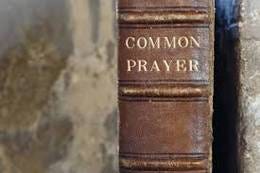
Grief has its own strange energy, and here it gives rise to one of the longest lines in the poem, and the only metaphor: “the colour of wrongdoings is a night without moon”. The elegance of this phrase is that no colour is mentioned. We are left to imagine the nature of this darkness for ourselves, informed by our own traumas, and it’s uncomfortable. It reminded me of being a child in church, hearing the words of the confession from the Anglican Book of Common Prayer: “We have left undone those things which we ought to have done”. It was the first time it occurred to me that it was not enough simply not to do bad things, and as the anxious child of a sick mother, I felt I’d never have peace again. Small wonder that the “i” is entirely absent in this line, hiding from its sins of omission.
Mulholland could have completed a sonnet here, but as with Foley’s poem last week, this is a poet too experienced to go for the obvious “crash-mat” landing, to borrow a phrase from Poetry School tutor Meryl Pugh. We are not done yet – surely the point of therapy is that there is always time to learn, as long as we are alive and cognitively able – and here in the shadows “i find a child who hid long ago – / ask if she’s willing to swap places”. The dash is the only end-stop of the poem; indeed, the only punctuation. It does not halt the monologue, but pauses it long enough for us to share the speaker’s epiphany: here is the traumatised inner child, and the speaker finally invites her to come out. That this is asked as a favour is signified by the poem’s second adjective, “willing”. Permission is solicited: we don’t know if it will be granted because the speaker themself doesn’t know. The poem’s ending, with no final full stop, is as open-ended as the therapeutic process, which continues in the client long after their in-person work with the therapist has finished.
As Ursula K. Le Guin says, referencing Jung: “The shadow is all that gets suppressed in the process of becoming a decent, civilized adult”; but the child “needs self-knowledge. He needs to see himself and the shadow he casts … he can learn to control it and to be guided by it.” Remarkably, in sixteen lines, this poem draws us backwards from scars to the root of trauma, inviting us to consider whatever “dark shades” haunt us that it might be useful to accept and learn from. In this respect it achieves in poem form what Philippa Perry’s excellent graphic novel Couch Fiction does: it gives an insight into the therapeutic process that both informs and invites reflection on the part of its readers.

*******
Something I like to do when reading poems is to see what poem is created by the end words, a kind of golden shovel in reverse. Here’s the end word poem from this piece, keeping any punctuation; as the original poem is in one block, so too is the end-word poem:
scar-coat
feeling
remember
taking
waiting
new york
face
together
speaking
blade
shadows
film
dead
moon
ago –
places
*******
Each week, I’ll share a poem of my own if I think there’s one which chimes with the poem under discussion. Here’s “Peppermint Blood”, which was first published in issue 78 of The Frogmore Papers, September 2011, having been shortlisted by Tamar Yoseloff for the 2011 Frogmore Poetry Prize.
Content note: self-harm
Peppermint Blood

The stinging kitchen cuts, the tiny smiles
engraved by thorns, the gritty scuff of stone –
most bleeds are small, domestic, meted by
the cosy slings and arrows of the home.

We do not choose to think of other blood
from surgery or accident: a flood
we tell ourselves won’t happen, that our skin
can be relied upon to hold us in.

Yet there are those of us who can’t resist
a curious knife or fingernail; who lift
the fragile epidermis, watch the red
puddle and rise, hypnotised, fed –

sometimes, brushing teeth, I bite my lip
to taste the bitterness of blood and mint.

Suzanna Fitzpatrick
Works Cited
Church of England. “The Order for Morning Prayer.” The Church of England, www.churchofengland.org/prayer-and-worship/worship-texts-and-resources/book-common-prayer/order-morning-prayer. Accessed 14 January 2026.
corceiro. “Movies with “Room” in the title.” IMDb, 5 November 2023, www.imdb.com/list/ls523266140/?ref_=ext_shr_lnk. Accessed 14 January 2026.
Le Guin, Ursula K. “The Child and the Shadow.” The Quarterly Journal of the Library of Congress, vol. 32, no. 2, 1975, pp. 139–48. JSTOR, www.jstor.org/stable/29781619. Accessed 14 January 2026.
Maxwell, Glyn. “I like the old stuff that rhymed”, Silly Games to Save the World, 7 April 2024, open.substack.com/pub/glynmaxwellgmailcom/p/i-like-the-old-stuff-that-rhymed?r=2q9p8f&utm_campaign=post&utm_medium=web. Accessed 14 January 2026.
Perry, Philippa. Couch Fiction, Penguin, 2020.
Sarner, Moya. “Regret can seriously damage your mental health – here’s how to leave it behind.” The Guardian, 27 June 2019, www.theguardian.com/lifeandstyle/2019/jun/27/regret-can-seriously-damage-your-mental-health-heres-how-to-leave-it-behind?CMP=share_btn_url. Accessed 14 January 2026.
Thank you Suzanna for you deep dive here - I felt so much in these lines from Mary, and your read added another depth to the layer of emotions. :)