The Deeper Read 31
Lauren Thomas

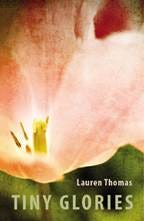
“My Heart in a Glass Case” from Tiny Glories (Green Bottle Press, 2026).
Green Bottle Press is winner of the 2025/6 Michael Marks Publishers’ Award.
Lauren Thomas is on Instagram. Her pamphlet Lavender Hill is also out now from The Braag.
Content note: heart surgery, human tissue.
My Heart in a Glass Case

You look like a fossil, a coral
cathedral deep below sea. An upside-
down octopus pressed into glass, tentacles
gone. Did you recognise me? Did I see
a slight pulse – an arterial bloom faintly
flowering through one of your tubes
when I came in the room? I put my hand up
to my other heart beating – she keeps me
alive, she is not really mine, though I wonder,
are you? Our death is displayed here, yet
curling inside your chambers and runnels
is bright DNA – mine and my mother’s,
like two spiny seahorses drifting
together through slow-moving seas.


In May 2023 Jennifer Sutton visited her own heart at a museum
sixteen years after it was removed during life-saving transplant
surgery.

Lauren Thomas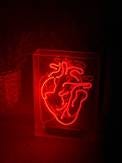
There are many ways of approaching writing a poem. Prompts, whether verbal or sensory, and constraints such as form or time can all be fruitful, but I love it when I come across something and get that jolt telling me this is a poem. For me it’s physical and emotional, like falling in love. I don’t know, but reading the note that accompanies Thomas’s poem, I suspect that this poem came from such a jolt. Imagine surviving a heart transplant and going to visit your own heart years later. How can you begin to process the situation: a heady mix of medical science, psychology, philosophy? Most people will go wow and leave it at that. Only a poet is fool enough to try to unpack it, to need to unpack it, but that’s why we do what we do. We can’t help ourselves.
Like Rishi Dastidar’s poem “How to verb a sore heart” in The Deeper Read 27, Thomas has chosen a free verse sonnet to consider affairs of the heart, though in this instance the heart is physically rather than emotionally broken. The title seems straight from fairy tales, reminiscent of Snow White’s crystal coffin and the wicked queen’s instruction to the huntsman to bring her the internal organs of her stepdaughter so she may eat them. In the original Grimm Brothers fairy tale this was her lungs and liver; the 1937 Disney animation changed it to her heart. Humans have long fetishised body parts, from the folkloric belief in sympathetic magic, the term coined by James Frazer in The Golden Bough, to the veneration of saints’ relics and even children ritually leaving their lost milk teeth out for the tooth fairy. But these body part are usually extraneous; until the first successful human heart transplant performed by Christiaan Barnard and his team in 1967, nobody could survive losing their heart.
This poem deals with fact, not fable: the heart is a specimen, and its original host addresses it wonderingly. Her initial simile in the poem’s opening line, “You look like a fossil,” (1), is reminiscent of former life preserved: her own former life. But this is too solid an image for such a liminal poem, and she turns to oceanic metaphors:
                                       a coral
cathedral deep below sea. An upside-
down octopus pressed into glass, tentacles
gone.
(1-4).
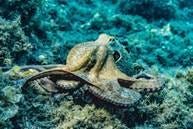
We see here the subtlety of Thomas’s metaphoric evolution: from fossil to coral to octopus. The first image is of something dead, long turned to stone by time and geological processes. The second appears stone-like but is living, and not one organism but many; introducing pluralism as one of the poem’s themes, as well as the sense of reverence inherent in “cathedral”. The third is alive, and notable for having three hearts and nine brains. But things are not as they seem; the annotating line breaks (Longenbach 69) creating tension, tripping us up. The octopus is “upside- / down” (2-3), the daring mid-word break emphasising disorientation. Something vital is missing, and the break makes us wait to find out what: “tentacles / gone” (3-4).
As the first third of the poem moves into the second, Thomas hints at what this missing thing may be. The poem began with the second person pronoun being addressed by the speaker, but the speaker herself has been shadowy; indeed, we won’t know her identity until the footnote. Now, however, she brings herself fully into the poem with a direct question; she is missing her heart, and vice versa:
           Did you recognise me? Did I see
a slight pulse – an arterial bloom faintly
flowering through one of your tubes
when I came in the room?
(4-7).
The heart cannot answer, but she fancies there are signs of recognition, a vestigial connection, sympathetic magic: “a slight pulse – an arterial bloom”. The tense shifts from the present to the past. In my own writing, I’m suspicious of whether such shifts can work in poems, especially short ones, but Thomas deploys it here as a skilful signifier of a change in emotional state to wishful possibilities, as well as embodying the duality this poem does so well. The speaker is without her heart, yet alive. She has a heart, but it is not hers; its original host is dead, their tragedy enabling the speaker’s own potential tragedy to be avoided. Life, death, past, present and future – not to mention might-have-beens – are all delicately balanced by Thomas as she mediates the push and pull inherent in her imagery of tides and pulses.
We are brough out of the flashback into the present tense again with a devastatingly simple sensory image: “I put my hand up / to my other heart beating – ” and I wonder how many readers do the same at this point. How often do we think of our hearts, if we are fortunate not to have any issues with them? Maybe only when exercising, or if they beat fast for emotional reasons. “The heart is an engine going nowhere”, according to singer-songwriter Kat Flint, and we do tend to assume it’ll keep running, even whilst knowing that one day it won’t.
After this brief moment of physicality, we flow onwards through a list of philosophical considerations: “– she keeps me / alive, she is not really mine, though I wonder, / are you?” (8-10). The break on “keeps me / alive” signifies how fragile this relationship is, especially in the context of a previous literal heartbreak, and leads us to consider the many ways in which our bodies ‘keep’ our consciousness. The speaker’s current heart is not hers, but neither is her original heart, now housed in a museum rather than in her body, hopefully with her consent; this made me think about ownership of bodies, particularly female bodies. There is a long, ignoble history of human tissue exploitation rooted in misogyny and colonialism, most notably in the appalling case of Henrietta Lacks.

As the sonnet turns on its volta, the blunt pronouncement “Our death is displayed here” is mitigated by “yet” (10), leaving us hanging on the end of a line break, leading us into another meditation on the nature of life: “curling inside your chambers and runnels / is bright DNA – mine and my mother’s,”. The speaker should be dead, but isn’t. Her heart is dead, but keeps inside its cells the key to her genetic identity, involuntarily gifted to her from her mother, just has her donor unknowingly gave her their heart. We are reminded again of the octopus and its ability to navigate what seem impossibly small and complex spaces.
The poem ends with a simile that leads us back to the marine imagery of the start of the poem: “like two spiny seahorses drifting / together through slow-moving seas.” (13-14). It’s a peaceful and open-ended image that lets us float away on a wave of awe at the complexity of life and the privilege of the human consciousness in being able to interrogate it. The scope of this final couplet, like that of the poem as a whole, is both all-encompassing and intimately tender as we are left “drifting / together” in our pairs: mother and child, donor and recipient, human and natural world, poet and reader.
*******
Something I like to do when reading poems is to see what poem is created by the end words, a kind of golden shovel in reverse. Here’s the end word poem from this piece, keeping any punctuation, in one block as per the original poem. It’s interesting to note how every line enjambs up to the volta, after which there is an end-stop which pauses us on “wonder’”, though even then only with a comma. After that, the only other end-stop apart from the final full stop is a comma after “mother’s,”; fitting for a poem which meditates on organ donation as a type of life-giving. Otherwise, the poem flows freely from line to line in keeping with its aquatic imagery, and the punctuation which controls its pacing is mainly found in its caesurae; its annotating line breaks (Longenbach 69) maintaining tension throughout as Thomas considers the nature of life, death and identity.
coral upside- tentacles see faintly tubes up me wonder, yet runnels mother’s, drifting seas.
*******
Each week, I’ll share a poem of my own if I think I’ve one which chimes with the poem under discussion. Here’s “Playdough Heart”, which was first published in Obsessed with Pipework issue 102, edited by Charles Johnson and Katherine Neocleous.
Playdough Heart

damp in the bottom of your school bag –
salty red and blue paste, moulded
to a twisted fist. Proudly, you point out
ventricles, atria, finger tracing
the path of oxygenated blood.
I imagine the charged gasp
of each inward gulp, the teeming cells
hurtling round the body’s rollercoaster,

remember the first time I saw your heart
just six weeks in my womb, purring
in your tiny rice-grain form –
how mine sobbed to see it, slowed
its anxious pulse, stemming the bleeding
that gave me the terror you’d gone.

Suzanna Fitzpatrick
Works Cited
Brink, J G, and J Hassoulas. “The first human heart transplant and further advances in cardiac transplantation at Groote Schuur Hospital and the University of Cape Town - with reference to : the operation. A human cardiac transplant : an interim report of a successful operation performed at Groote Schuur Hospital, Cape Town.” Cardiovascular journal of Africa vol. 20,1 (2009): 31-5. PMID: 19287813, PMCID: PMC4200566. Accessed 5 August 2026.
Fitzpatrick, Suzanna. “The Deeper Read 27: Rishi Dastidar.” Substack, 10 July 2026, suzannafitzpatrick.substack.com/p/the-deeper-read-27. Accessed 5 August 2026.
Flint, Kat. “Ohio.” YouTube, 20 September 2008, youtu.be/9BRtCxyoVPg?si=Z9RKquDy5UyqJMp0. Accessed 5 August 2026.
---. “Ohio.” Lyrics on SongMeanings, 18 September 2008, songmeanings.com/songs/view/3530822107858740845/. Accessed 5 August 2026.
Grimm, Jacob and Wilhelm. “Little Snow White”. Translated by D. L. Ashliman, Grimm 053, University of Pittsburgh, 15 November 2005, sites.pitt.edu/~dash/grimm053.html. Accessed 5 August 2026.
Jones, Jonathan. “From St Peter’s bones to severed heads: Christian relics on display.” The Guardian, 18 November 2013, www.theguardian.com/artanddesign/jonathanjonesblog/2013/nov/18/st-peters-bones-christian-relics?CMP=share_btn_url. Accessed 5 August 2026.
Khan, Faroque A. “The Immortal Life of Henrietta Lacks.” The Journal of IMA vol. 43,2 (2011): 93–94. doi:10.5915/43-2-8609, pmc.ncbi.nlm.nih.gov/articles/PMC3516052/. Accessed 5 August 2026.
Longenbach, James. The Art of the Poetic Line, Graywolf Press, 2008.
Rober, Mark. “Octopus vs Underwater Maze.” YouTube, 24 November 2023, youtu.be/7__r4FVj-EI?si=TgCu3fp8K4lr7WT7. Accessed 5 August 2026. The octopus was released back into the wild after the video was filmed.
Treasure-Smith, Oliver. “Exploring the Anatomy of an Octopus.” Bristol Aquarium, 5 January 2026, www.bristolaquarium.co.uk/blog/exploring-the-anatomy-of-an-octopus/. Accessed 5 August 2026.
Wikipedia. “Snow White and the Seven Dwarfs (1937 film).” Wikipedia, en.wikipedia.org/wiki/Snow_White_and_the_Seven_Dwarfs_(1937_film). Accessed 5 August 2026.
Wikipedia. “Sympathetic magic.” Wikipedia, en.wikipedia.org/wiki/Sympathetic_magic. Accessed 5 August 2026.
Wikipedia. “The Golden Bough.” Wikipedia, en.wikipedia.org/wiki/The_Golden_Bough. Accessed 5 August 2026.
Thank you so much for this thoughtful reading, I absolutely love your poem and think they compliment each other beautifully.
Stunning <3